The archetypically Habsburg figure of Mariano’s father, Domenico – originally from Fianona/Rabaz, a pilot, or rather a ‘harbour pilot’, in Trieste but also on the remote island of Arbe at the dawn of the ‘First War’ – or that of Uncle Zammaria, with his Austro-Hungarian uniform and his Franz Ferdinand-style moustache, combined with that of the devout and determined mother from the island of Cherso, already form an unmistakable setting, the backdrop to so many of the stories set in the ‘vece province’ (that is, the coastal territories of the Habsburg Empire) devised by the duo.
But the picture would not be complete without the ‘Carpinterian’ element, which rounds off C&F’s Adriatic ‘Portolano’ – and Portolano was, in fact, one of the names of their radio variety show, transformed into Bortolano with the invention of the bard Bortolo – extending the Maldobrie’s coastal voyages as far as the mouth of the Bay of Kotor and beyond. The family’s distant origins can be traced back to the Jewish community of Split, where her great-grandmother Bellina (Lina) Macchioro was born; her distinctive dialect found its way to Trieste through the Corfiot accent of her daughter Irene’s husband, Elio Mordo, who, like many of his fellow Jews, had left Corfu to escape persecution and had ultimately been swallowed up by the Nazi extermination machine. Her mother, Vittoria, however, escaped deportation and death – a fate that also befell other members of the family – and married Vito Carpinteri, a Sicilian from Syracuse who had arrived in Trieste with the Italian army in 1918.
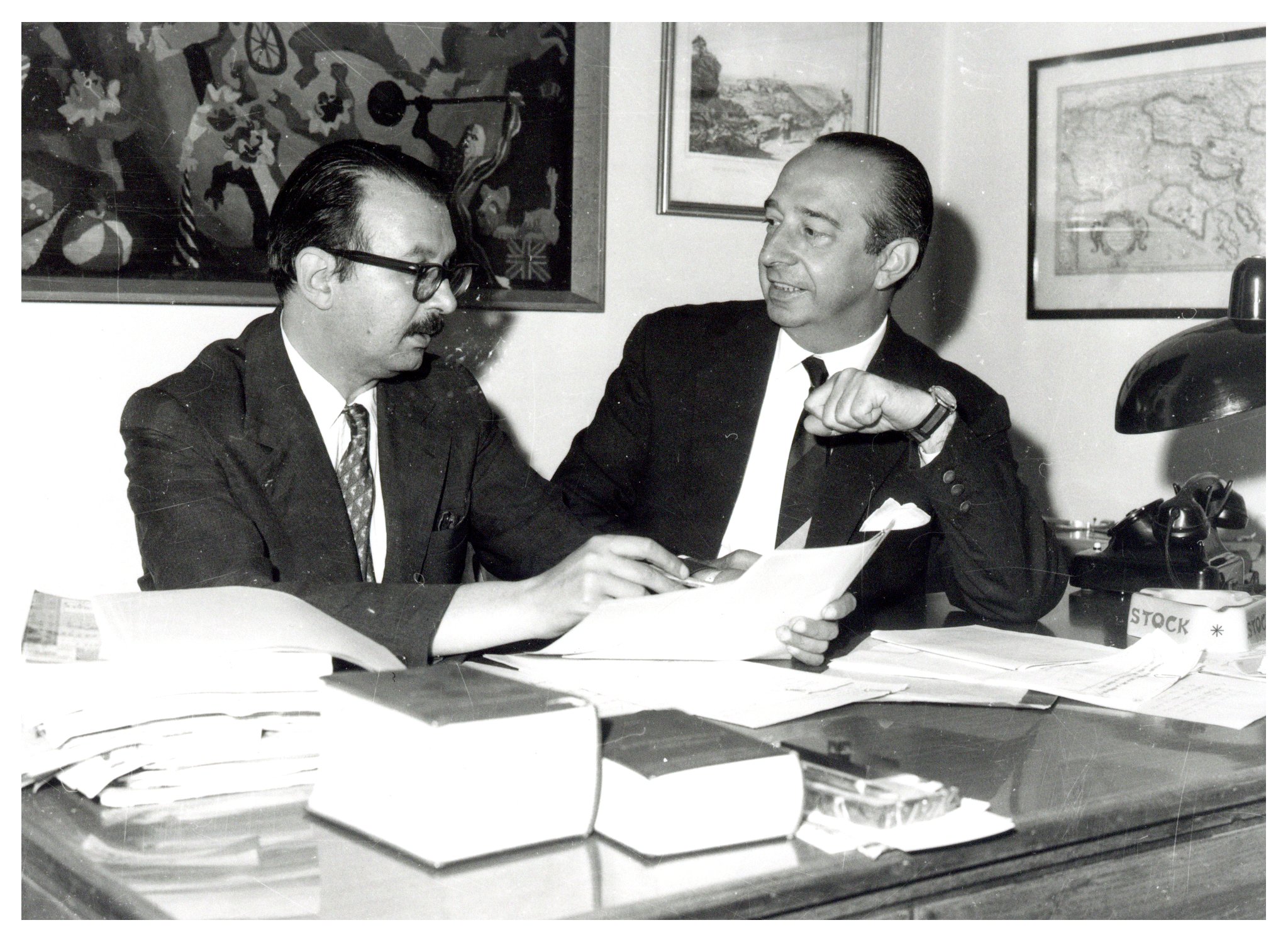
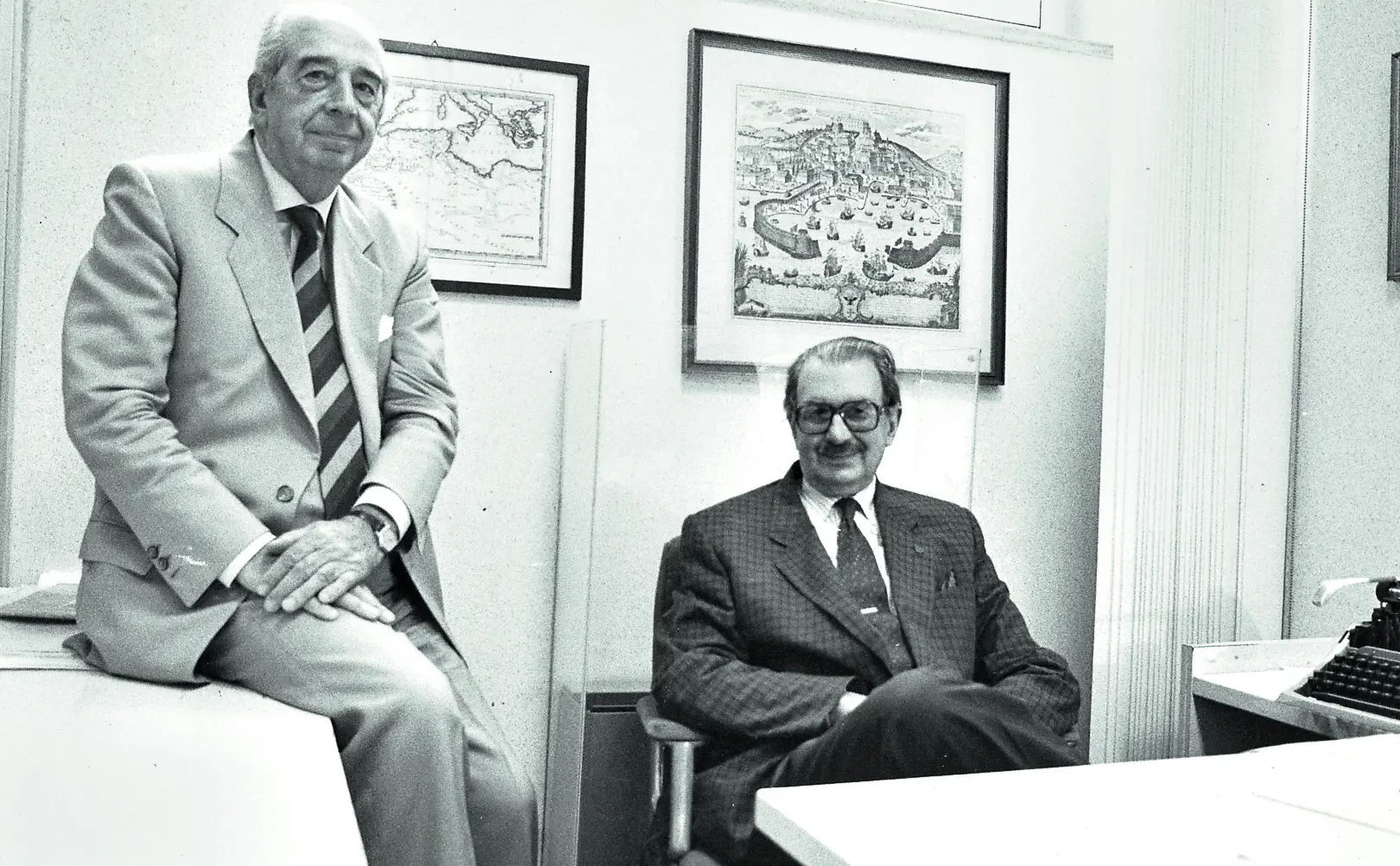
It is against this backdrop that the story of the two men, both born in 1924, unfolds. They met in 1945, in their twenties, at the offices of the student newspaper “Caleidoscopio”: one – Carpinteri – had just emerged from a period in hiding between Trieste and Cortina, whilst the other – Faraguna – from the Resistance in the ‘white’ Osoppo partisan brigade. Never to be parted again. Their collaboration, a unique form of intellectual and artistic complementarity, spanned over fifty years on the editorial team of “La Cittadella” and working together at the “Piccolo” in various roles, alongside almost as many radio variety programmes, dozens of books and pamphlets in prose and verse, and nearly twenty theatre productions, and lasted right up until the threshold of death – which came for Faraguna in 2001 and for Carpinteri in 2013. An alchemy that Lino Carpinteri certainly described in overly generous terms as an interaction between a mind (Faraguna) and an arm (himself), whereas their inimitable working method is described to us by various witnesses – Decio Gioseffi, Tullio Kezich and others – as a back-and-forth exchange of ideas and gradual adjustments, building to a climax of mutual satisfaction sealed with a laugh.