Tipologia: Display Case

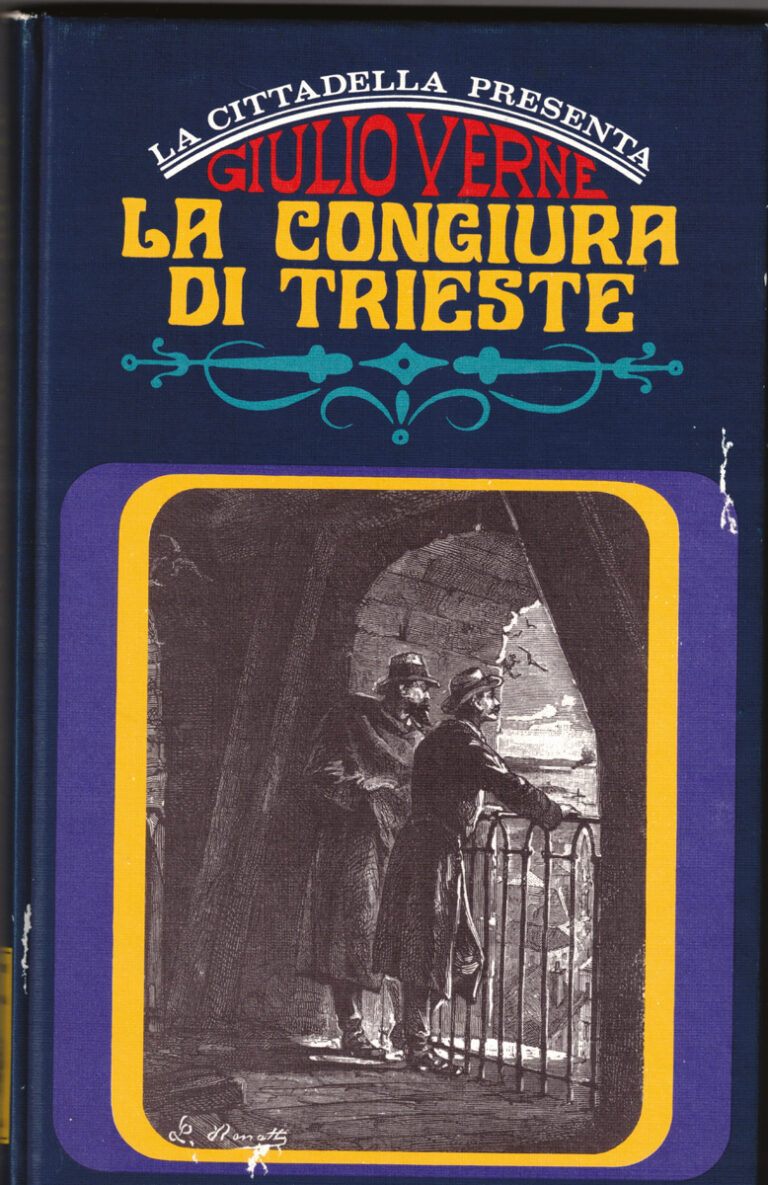
Giulio Verne La congiura di Trieste Trieste, La Cittadella, 1970 Unico esemplare di opera edita dalla casa editrice “La Cittadella” non dovuta direttamente alla penna di Carpinteri e Faraguna, il volume offre una parte del romanzo Mathias Sandorf di Verne, ambientata a Trieste e nella penisola istriana. Museo LETS – Letteratura Trieste
Two men in a crow's nest

A ‘mockumentary’ travel diary

Before the First War (1967), when Austria was a well-ordered country (1969) and we paid our respects to the figure of Poor Old Franz (1985) by singing Serbidiòla (1964) and Viva l’A. (1983), We from the old provinces (1971) would sometimes get up to some Maldobrie (1966).
> APRI
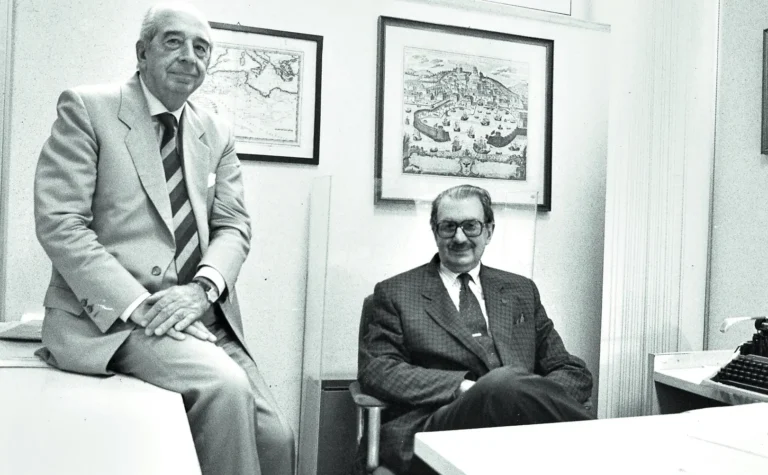
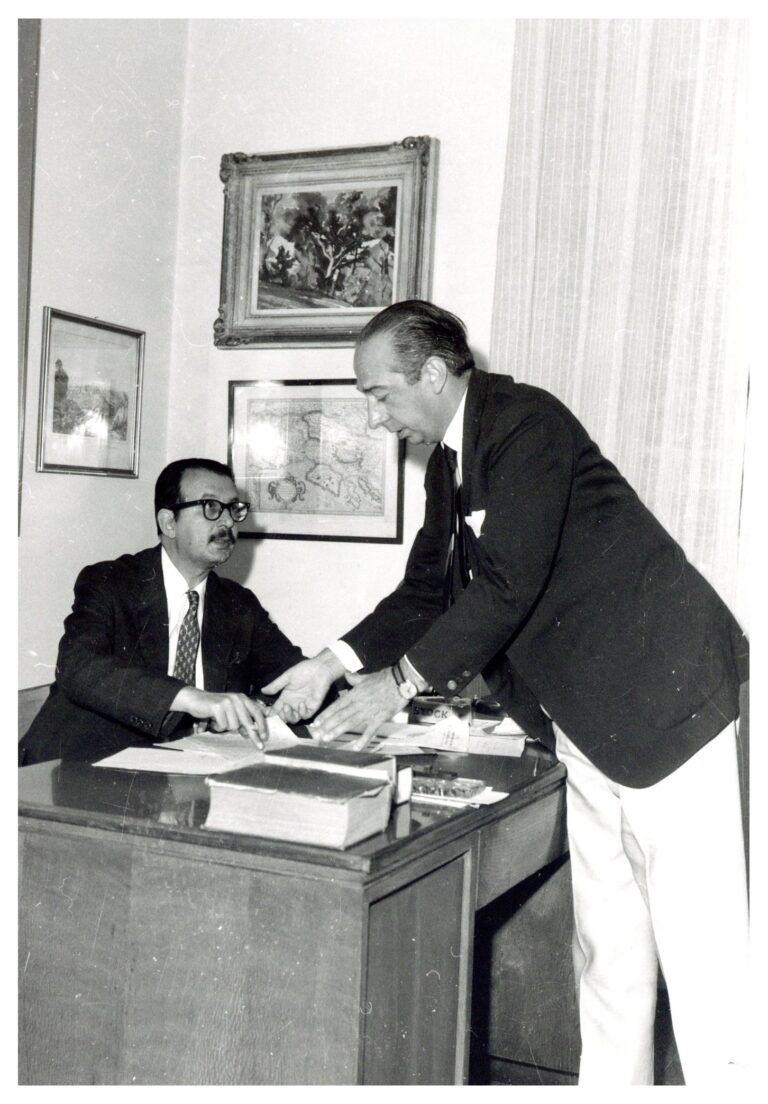
Giornalfoto, Trieste Mariano Faraguna e Lino Carpinteri presso la sede del “Piccolo” negli anni ‘70 Civico Museo Teatrale Carlo Schmidl, Trieste
Two men in a crow's nest

Ruben and Angelicus semper fidelis

The story of “La Cittadella”, the satirical newspaper directed and edited for 54 years – from 1947 to 2001 – by Carpinteri and Faraguna, first as a standalone publication and then as a weekly supplement to the revived “Il Piccolo”, is in itself extraordinary for its longevity and continuity.

> APRI
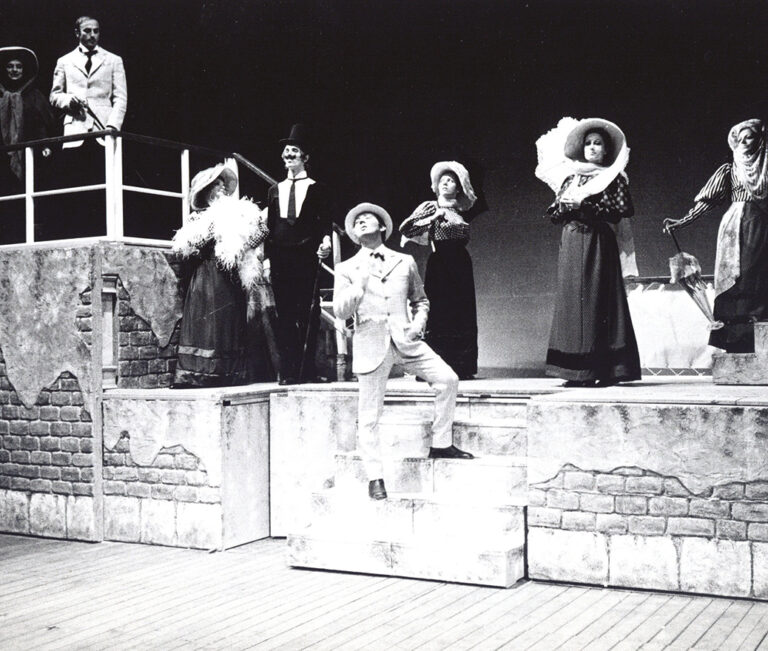
Noi delle vecchie province Foto di scena, Trieste, Politeama Rossetti, 1972 Civico Museo Teatrale Carlo Schmidl. Dono Ariella Reggio
Two men in a crow's nest

“Seasoned” entertainment professionals

The theatre is another area in which the “Premiata Ditta” C&F has enjoyed extraordinary success. The so-called Maldobrie cycle, staged in the first half of the 1970s – Le Maldobrie (1970), Noi delle vecchie province (1972), L’Austria era un paese ordinato (1974) – drew no fewer than sixty thousand people to the Politeama Rossetti over the course of nearly eighty performances in total.

> APRI
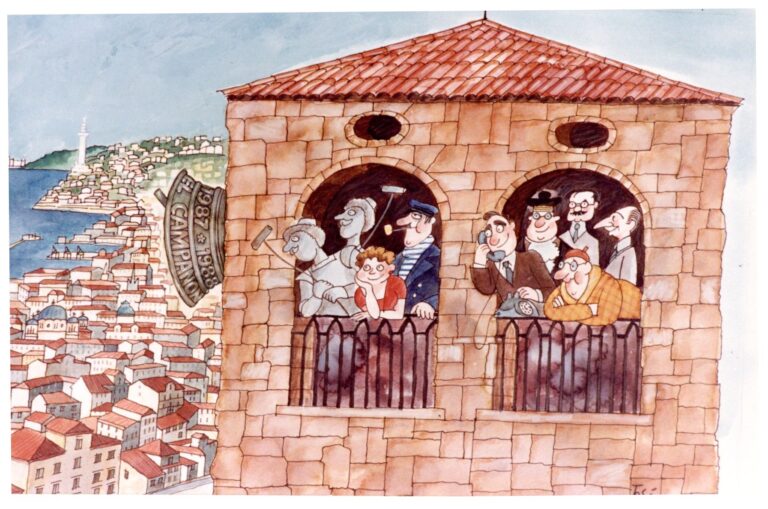
Allegoria del Campanon 1987-1988 L’illustrazione raggruppa le caricature dei protagonisti di una edizione abbastanza tarda della trasmissione; nell’arco di sinistra, accanto alle fi gure di Micheze e Jacheze si riconoscono una giovane Ariella Reggio (Siora Nina) e Gianfranco Saletta (Bortolo). Sulla destra Ruggero Winter (Pronto, mama…?), Giampiero Biason (Processo alle parole) e Luciano Del Mestri (El Noneto). In secondo piano Carpinteri e Faraguna. Civico Museo Teatrale Carlo Schmidl; dono di Ariella Reggio
Two men in a crow's nest

On C&F’s waves

“The Noneto from Co’ ierimo putei and Serbidiòla were created for the radio; the telephone exchanges for the Pronto, mama… feature were written for the radio; and the episodes later collected in the six volumes of Maldobrie were originally broadcast on the radio, to which Lino Savorani – the first, unforgettable Bortolo – lent his voice and brought to life on the stage of the Teatro Stabile.”

> APRI
Carpinteri e Faraguna presso la sede del quotidiano “Il Piccolo” fra la fi ne degli anni ‘80 e i primi anni ‘90 Teatro Stabile La Contrada, Trieste
Two men in a crow's nest

Lino C. & Mariano F.

To understand their work – a tapestry of excavations, memories and nostalgia, which are, of course, literary nostalgia and chronologically implausible, constructed with irony and self-awareness, yet grounded in a cultural heritage of authentic and shared memories – the family histories of Carpinteri and Faraguna are almost as important as their personal stories.

> APRI
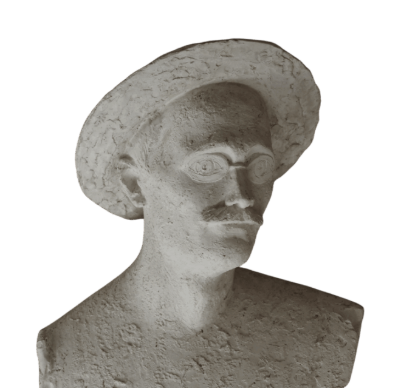
busto di James Joyce
Joyce Museum

Mascherini and the bust of James Joyce

In 1982, the Trieste-born sculptor Marcello Mascherini (1906–1983) created a bronze portrait of the writer to honour his fellow citizen James Joyce on the centenary of his birth; it can still be seen today in the ‘Muzio de Tommasini’ Public Garden.

> APRI
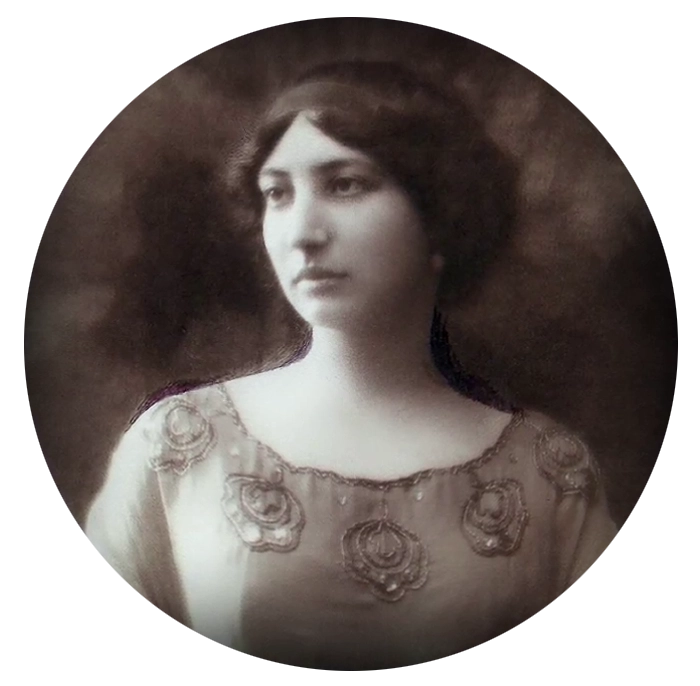
Bice Richetti Randegger, 1911 > gentile concessione Erik Schneider
Joyce Museum

Giacomo Joyce

Between 1911-1914 Joyce wrote Giacomo Joyce, an enigmatic text composed of 50 unconnected and irregular fragments

> APRI