Prima della prima guerra (1967), quando L'Austria era un paese ordinato (1969) e portavamo rispetto alla figura di Povero Nostro Franz (1985) cantando Serbidiòla (1964) e Viva l'A. (1983), Noi delle vecchie province (1971) a volte combinavamo Le Maldobrie (1966).
When skilfully arranged, the titles of Carpinteri and Faraguna’s poetic and narrative works form a statement that encapsulates the era, the sentimental mood marked by nostalgia for an idealised world that has vanished, the geographical setting and the playfulness of the stories told by the duo.
Their collection of verses, originally created for the radio and only later published in print, first appeared under the title Co’ ierimo putei (When We Were Children), attributed to the fictional author “El noneto” (that is, the character credited with writing the verses in the radio variety show), and was subsequently renamed Serbidiòla: a ‘nonsensical word’, as it is called, coined from the opening lines of the Italian version of the Austrian national anthem ‘Serbi Iddio l’Austriaco Regno…’. The poems paint a fascinating and exhilarating picture of working-class Trieste – poor nor honest – during the years when it was the port of the Habsburgs, and they immediately garnered success and attention, so much so that in 1968 the Milanese publisher Scheiwiller decided to produce a deluxe edition, opening with a previously unpublished poem by Eugenio Montale dedicated to Trieste and his friend Bazlen: La madre di Bobi B. (Bobi B.’s Mother).
The six volumes of ‘maldobrie’ – a word combining the Croatian terms ‘malo’ (little) and ‘dobro’ (good), meaning something between ‘mischief’ and ‘roguishness’, which had existed previously but only entered Triestine usage after Carpinteri and Faraguna made it the common name for their distinctive ‘genre’ of short story – were a huge hit with the local public, aided in this case too by the success of the radio programme El Campanòn, where Il Bortolano originated: that is, the series of adventures recounted by the fishmonger Bortolo, a former sailor with long and extensive experience, with Siora Nina by his side. Le maldobrie also received a ‘national’ edition in Italian (not a ‘translation’ but a ‘version’ that partly distorts the original text), edited by Furio Bordon for the Longanesi publishing house in 1982. The original volumes, printed – and often reprinted – with great care by the publishing house “La Cittadella”, are enriched by a series of reproductions of postcards and documents featuring fictitious handwritten notes relating to the events recounted, enhancing the impression of reality, much like in a modern mockumentary, yet always within an ironic and playful framework that is the consistent tone of these works. Through the memoirs of Bortolo, an actor and witness to a series of events whose sources can be traced to a very wide and diverse range of local oral narratives, anecdotes and jokes, as well as historical chronicles and major collections of short stories—from The Thousand and One Nights to Pirandello’s short stories— macrohistory collides with microhistory – and vice versa – with highly comical results.
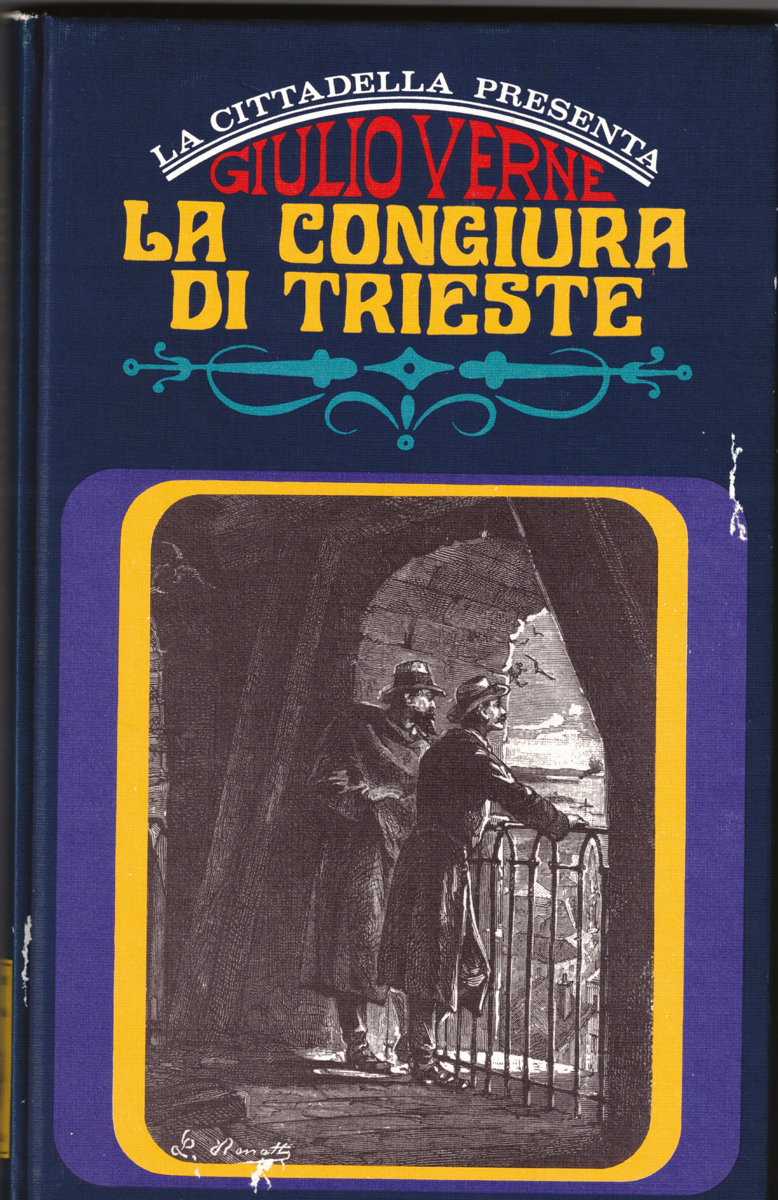
Giulio Verne
La congiura di Trieste
Trieste, La Cittadella, 1970
Unico esemplare di opera edita dalla casa editrice “La Cittadella” non dovuta direttamente
alla penna di Carpinteri e Faraguna, il volume offre una parte del romanzo Mathias Sandorf di
Verne, ambientata a Trieste e nella penisola istriana.
Museo LETS – Letteratura Trieste